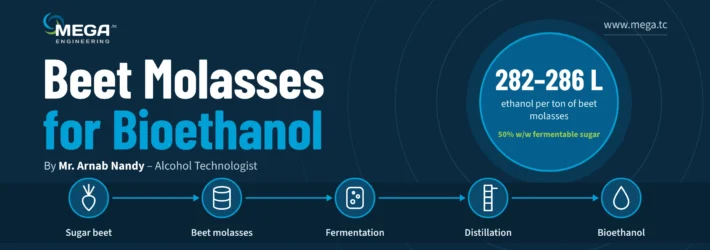
How beet molasses becomes bioethanol, why it is harder to ferment than other feedstocks, and how to treat the vinasse it leaves behind.


Mega Engineering
October 26, 2026
High-Gravity Fermentation: Technical Insights for Distillery and Biofuel Plants
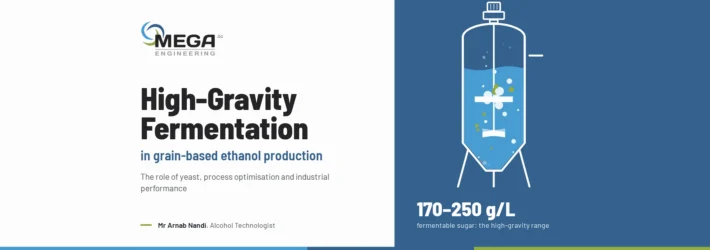
Technical insights for distillery and biofuel plants By Mr Arnab Nandy, Alcohol Technologist. Published 24 October 2026. Can a grain distillery produce more ethanol from the same fermenters while using less water and steam? High-gravity fermentation says yes, provided the yeast is looked after properly. What is high-gravity fermentation? High-gravity fermentation (HGF) is an ethanol production method in which yeast ferments a more concentrated mash, typically 170–250 g/L of fermentable sugar, to produce a stronger wash. Above 250 g/L it is called very-high-gravity (VHG) fermentation. Grain distilleries use it to make more ethanol per batch while using less water and distillation
Mega Engineering
October 13, 2026
Biogas Feedstocks and Their Challenges
Biogas Feedstocks and Their Challenges | CBG Plant Series CBG plant series, part 1 Biogas feedstocks and their challenges A CBG plant succeeds or fails on its feedstock, long before the digester is built or the upgrader is chosen. Here is what really drives methane yield, where feedstocks cause trouble, and how plants manage it.
Mega Engineering
July 23, 2026
Biogas Purification Technology: Choosing the Right Upgrading Solution
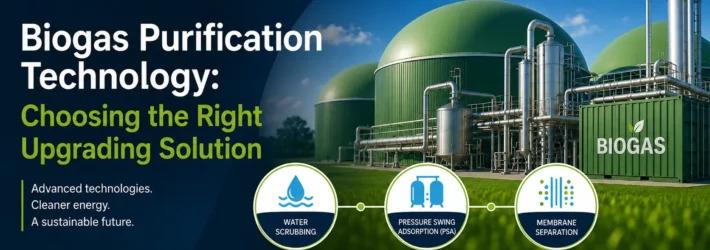
As industries and governments increasingly focus on renewable energy, biogas has emerged as a sustainable alternative to conventional fuels. However, raw biogas contains impurities such as carbon dioxide (CO₂), hydrogen sulfide (H₂S), moisture, and trace gases that must be removed before it can be used as Bio-CNG or injected into natural gas grids. The process
Mega Engineering
June 9, 2026
India’s E85 (Ethanol 85) Ambition: Opportunity, Readiness, and the Roadblocks Ahead

India’s Ethanol 85 Story Is Entering a More Demanding Phase India’s energy transition is often framed around electrification, renewable power, and green hydrogen. Yet liquid biofuels remain an important part of the country’s transport decarbonization strategy because they can reduce crude oil dependence, support rural incomes, and work within much of the existing fuel ecosystem.
Mega Engineering
May 25, 2026
Life @ Industrial Export Manufacturing : How Mega Engineering Powers Global Industries
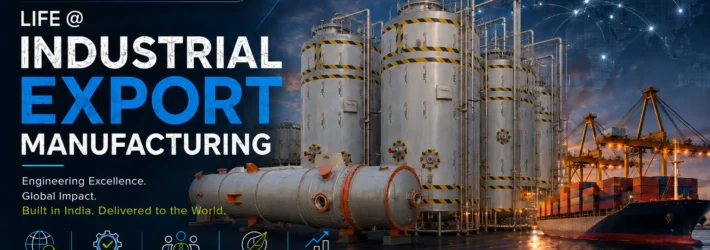
In the world of global trade and industrial development, industrial export manufacturing plays a critical role in connecting innovation with international growth. Behind every successful industrial project is a company capable of delivering quality, engineering precision, and reliable execution across borders. Mega Engineering stands at the forefront of industrial export manufacturing, delivering advanced turnkey engineering
Mega Engineering
May 11, 2026
Vinasse Dryer Manufacturer from India – Advanced Drying Solutions by Mega Engineering
The distillery and ethanol industries generate a large amount of liquid waste known as vinasse, also called spent wash. Proper treatment and disposal of this waste is essential to meet environmental regulations and maintain sustainable industrial operations. A Vinasse Dryer helps convert this liquid waste into dry solids, making it easier to manage and reuse.
Mega Engineering
April 16, 2026
E-Fuels vs Ethanol: Environmental Impact,Efficiency and Future of Sustainable Fuels
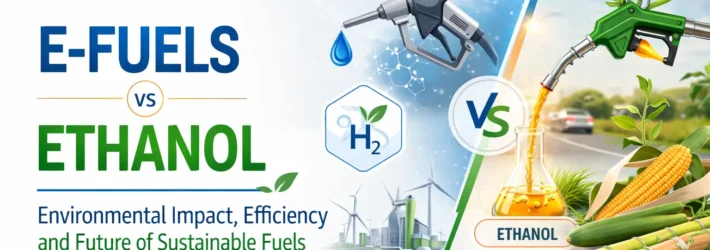
As the world moves toward sustainable energy solutions, alternative fuels are becoming increasingly important in reducing carbon emissions. Among the emerging options, E-fuels and ethanol are often discussed as potential alternatives to conventional fossil fuels. Understanding the environmental impact of E-Fuels vs Ethanol is essential to determine which fuel can better support the transition to
Mega Engineering
March 23, 2026
Condensate Recovery System in Distillery Plants: Improving Energy Efficiency and Sustainability
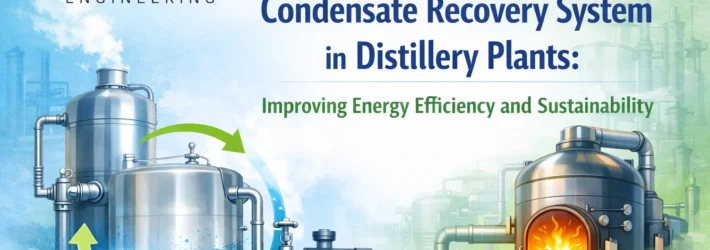
In modern distillery operations, energy efficiency and sustainability have become critical priorities. Distilleries consume significant amounts of steam for processes such as heating, evaporation, and distillation. During these processes, steam eventually condenses into hot water known as condensate. A condensate recovery system plays a crucial role in capturing this valuable resource and returning it to
Mega Engineering - All Rights Reserved.
Powered by